


How Many Times Can You Reuse Crochet Human Hair?
Investing in human hair for a crochet install is a whole commitment. Unlike synthetic packs that you wear for a month and chuck straight into the trash, human hair is a financial investment. You’re dropping good money because you want that flawless, lightweight bounce—and more importantly, you want to use it again.
But exactly how many times can you actually get away with reinstalling it before it starts looking rough? Let’s break down the truth about reusing your crochet human hair, what messes up its lifespan, and how to keep it looking fresh for the next round.

How Many Times Can You Reuse Crochet Human Hair?
On average, you can reuse 100 % virgin crochet human hair for 3 to 6 installs, allowing it to last anywhere from 6 months to over a year in total wear time.
The catch? This isn't synthetic hair where every strand stays perfectly grouped. Because it’s human hair installed via crochet knots, its survival depends entirely on how you take it down and how well you treat it between installs.
4 Major Factors That Dictate Your Crochet Lifespan
Not all human hair makes it to round three. If your hair is tangling or thinning out too quickly, it usually comes down to these four things:
1. The Hair Quality (Virgin vs. Blends)
If you bought cheap "human hair blend" packs, don't expect a second install. It’s going to matt. True virgin or Remy human hair has the cuticles intact and running in one direction, which is the only reason it can survive being washed, conditioned, and re-looped.
2. The Curl Pattern
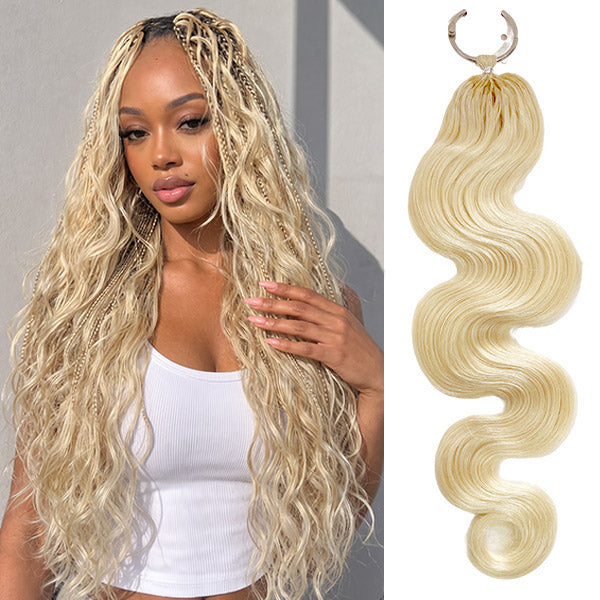
Straight or body wave crochet hair is incredibly easy to detangle and reuse. If you are rocking a tight coil, deep wave, or water wave texture, the strands naturally want to interlock and block together over time. Tighter textures require way more patience during the teardown if you plan to save them.
3. The Take-Down Method (The Dealbreaker)
This is where most people ruin their hair. When human hair is crocheted, it’s looped and knotted around your cornrows. If you yank, pull, or casually run scissors near your tracks during the take-down, you will stretch out the loops, cut the human hair strands, or create massive frizz. If you ruin the top loop where the crochet needle goes, that strand is dead.
4. Your Nighttime Routine
If you’re sleeping straight on a cotton pillowcase without protecting the hair, friction is eating away at your investment every single night, leading to split ends and matting at the nape of your neck.
How to Properly Care for Your Crochet Hair
If you want to stretch that hair to 3 or 4 installs, your maintenance game has to be tight both while it's on your head and after you take it out.
Step 1: Protect it every single night
Never skip the silk or satin bonnet. For long or wavy textures, loosely pineapple the hair (gather it at the very top of your head) or put it into two large, loose twists before putting your bonnet on to stop the strands from rubbing together.
Step 2: Do an ultra-gentle take-down
Don't rush this. Find the slipknot of the crochet loop near your braid, gently loosen it with your fingers or the tip of a rat-tail comb, and slide it out. Avoid pulling from the bottom of the hair shaft.
Step 3: Wash and deep condition the bundles
This is an absolute must between installs. Fill a sink with lukewarm water and a sulfate-free shampoo. Do NOT scrub or bunch the hair together—that causes immediate matting. Submerge it, gently stroke the shampoo downward through the strands, and rinse. Follow up with a high-moisture conditioner, let it sit for 15 minutes, and rinse thoroughly.
Step 4: Air dry and store correctly
Lay the hair flat on a microfiber towel or hang it up to air dry. Once it’s completely dry, mist a tiny bit of lightweight leave-in conditioner or serum through it, brush it out gently from ends to roots, and store it flat in a silk bag or a satin-lined container until your next braid-down.
Pro-Tip on Knots: Because human hair is slicker than synthetic hair, stylists often use a double-knot or a loop-under technique to keep it from sliding off your cornrows. When removing the hair, look closely at how it was anchored so you don't accidentally tighten the knot while trying to pull it out.
Learn More about Crochet Hair
Crochet Hairstyles for Black Women
Can You Go Swimming With Crochet Hair
How to Remove Crochet Hair Without Damaging Your Natural Hair


